 When a dog is diagnosed with severe Intervertebral Disc Disease (IVDD) and undergoes spinal decompression surgery, managing the post-operative recovery phase is critical. The trajectory of dog spinal surgery recovery is often complex and uncertain, prompting a search for advanced adjunctive therapies to accelerate nerve repair and tissue healing.
In recent years, clinical interest in hyperbaric oxygen therapy dogs (HBOT) has surged. However, evaluating this treatment requires distinguishing between anecdotal "miracle cures" and objective, evidence-based veterinary science. This article examines the clinical mechanisms, the latest 2026 veterinary research, and the practical considerations of integrating HBOT into an IVDD rehabilitation protocol.
HBOT for dogs with IVDD is a medical treatment wherein the patient is placed in a specialized, pressurized chamber and breathes near 100% pure oxygen at atmospheric pressures higher than normal (typically between 1.5 and 2.8 ATA).
The physiological benefits are driven by the physical dissolution of oxygen into the blood plasma under pressure. (For a deeper dive into the underlying physics and physiological mechanisms, read our comprehensive guide on the science behind hyperbaric chambers for dogs.)This mechanism allows oxygen to penetrate deeply into ischemic tissues with compromised blood circulation. The primary clinical benefits include:
Edema Reduction: Constricts blood vessels in normal tissues, significantly mitigating severe spinal cord swelling and inflammation following a disc herniation.
Neovascularization: Promotes the growth of new blood vessels in damaged areas.
Accelerated Healing: Enhances cellular regeneration and overall tissue repair.
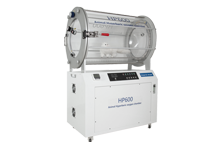
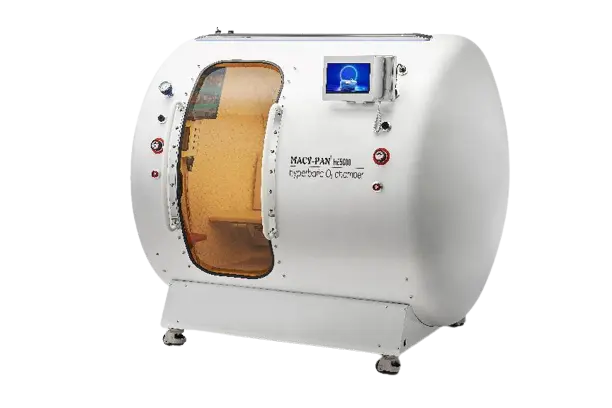
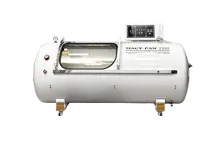
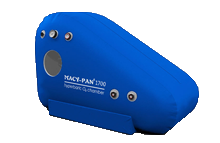
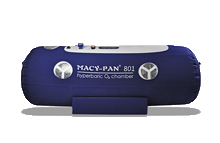
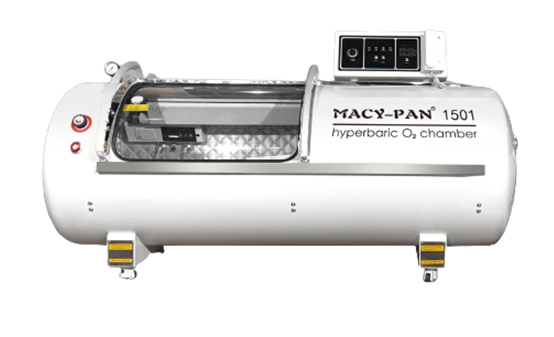
Modern veterinary hyperbaric chambers are spacious, transparent enclosures designed for patient comfort. The procedure is painless, and dogs—ranging from toy to giant breeds—typically acclimate quickly, often resting or sleeping throughout the session without the need for sedation.
In veterinary rehabilitation, HBOT is strictly classified as an adjunctive (supportive) therapy. A large-scale retrospective analysis of nearly 2,800 small animal HBOT sessions indicates that neurological injuries (50.4%) and tissue healing complications (31.4%) are the primary indications for treatment, with IVDD and spinal trauma being the most prevalent.
The definitive clinical value of HBOT for post-surgical IVDD patients remains under rigorous evaluation. A highly anticipated 2026 study published in the American Journal of Veterinary Research (AJVR) analyzed dogs recovering from hemilaminectomy surgery for thoracolumbar IVDD.
Deep Pain Perception: The study found that hyperbaric oxygen therapy dogs did not demonstrate a statistically significant improvement in the recovery of deep pain perception compared to the control group.
Overall Efficacy: The generalized results were neutral, confirming that HBOT should not be viewed as a universal standalone cure for severe spinal injuries.
Subgroup Potential: Subgroup analyses indicated that HBOT may offer targeted benefits for dogs with specific lesion locations, driving ongoing research into optimal post-surgical timing and patient selection.
While HBOT is highly effective for early-stage inflammation management, expectations regarding the rapid reversal of severe neurological deficits must remain scientifically grounded.
Integrating HBOT into a rehabilitation plan requires careful consideration of the treatment logistics and financial investment.
Duration and Frequency: Standard sessions last between 45 and 90 minutes, allowing for gradual pressurization and depressurization to prevent barotrauma (ear discomfort). Treatment protocols vary but typically involve once or twice daily sessions over several days to weeks, dictated by clinical response.
Dog Hyperbaric Chamber Cost: The financial commitment is a vital factor for treatment planning. A single HBOT session generally ranges from $125 to $250, depending on the facility and regional market. Because IVDD recovery necessitates a multi-session regimen, the cumulative cost must be factored into the overall post-operative care budget.
When administered by certified veterinary professionals, HBOT boasts an exceptional safety record. Retrospective data confirms an adverse event rate of less than 1%.
| Risk Category | Clinical Details |
| Minor Risks | Mild barotrauma (ear or sinus discomfort due to pressure changes), similar to human aviation experiences. |
| Rare Risks | Central nervous system oxygen toxicity, manifesting as a seizure. This is extremely rare and typically resolves immediately upon chamber depressurization. |
| Strict Contraindications | Untreated pneumothorax (collapsed lung), severe cardiac conditions, high fevers, or concurrent administration of specific chemotherapeutic agents. |
The search for data on hyperbaric oxygen therapy dogs highlights a commitment to providing the highest standard of post-operative care. While HBOT is a scientifically validated adjunctive therapy excellent for inflammation reduction and tissue healing, the 2026 AJVR data advises a measured approach regarding its impact on profound neurological deficits in IVDD patients.
The decision to utilize HBOT should be highly individualized. It requires a comprehensive consultation with a veterinary surgeon or a certified rehabilitation specialist to weigh the clinical evidence, assess the dog hyperbaric chamber cost, and determine the most effective, evidence-based pathway for the patient's recovery journey.

Discount Price, ship by DHL, door to door service, 5-7days delivery time, local technical support

We supply soft and hard chambers from 1.3-2.0ATA to reach different customers' needs

Create custom uniquea hyperbaric chambers to reach your target market

We have more than 50 distributors around world, looking forward to having you on board.

 français
  Deutsch
  italiano
  العربية
  čeština
  Suomi
Suomi  Polska
  עברי
עברי